Something Shifts: The Quiet Way Himeji Rewires the American Traveler
Most people expect to come home from Japan with great photos and a suitcase full of snacks. What they don't expect is to spend the next six months rearranging how they think about time, beauty, and what actually matters. Himeji has a way of doing that to people — quietly, completely, and without asking permission.
It doesn't announce itself. There's no single transformative moment you can point to, no mountaintop epiphany or dramatic cultural collision. What Himeji does is subtler and, in the long run, more durable. It just keeps working on you — during the trip, on the flight home, and then for a long time after, in the ordinary moments you never expected to be touched by it.
Travelers from the US describe a particular feeling when they return. Not jet lag exactly, though that's real too. More like a recalibration. Like something internal has been quietly adjusted while they weren't looking.
The Pace Gets Under Your Skin
America runs fast. That's not a criticism — it's just a fact of life most of us have internalized so completely we can't see it anymore. We eat while walking, check our phones mid-conversation, and feel vaguely guilty about sitting still. We've built an entire cultural mythology around productivity, hustle, and optimizing every spare minute.
Himeji doesn't do any of that.
The city moves at a pace that initially feels almost disorienting to American visitors. The streets are clean and quiet. Shopkeepers don't rush you. A meal is a meal — not a refueling stop. Even the tourists at Himeji Castle seem to move with more intention than the average crowd at, say, the Grand Canyon or Times Square.
At first, some visitors find it frustrating. Then they find it confusing. And then, usually around day two or three, they find it genuinely restful in a way they haven't experienced in years.
The interesting part is what happens after they get home. Former visitors consistently report a new impatience — not with slowness, but with unnecessary speed. The pointless rushing. The performative busyness. They start asking themselves, more often than before: does this actually need to happen right now? That question, small as it sounds, changes things.
Aesthetic Precision as a Philosophy
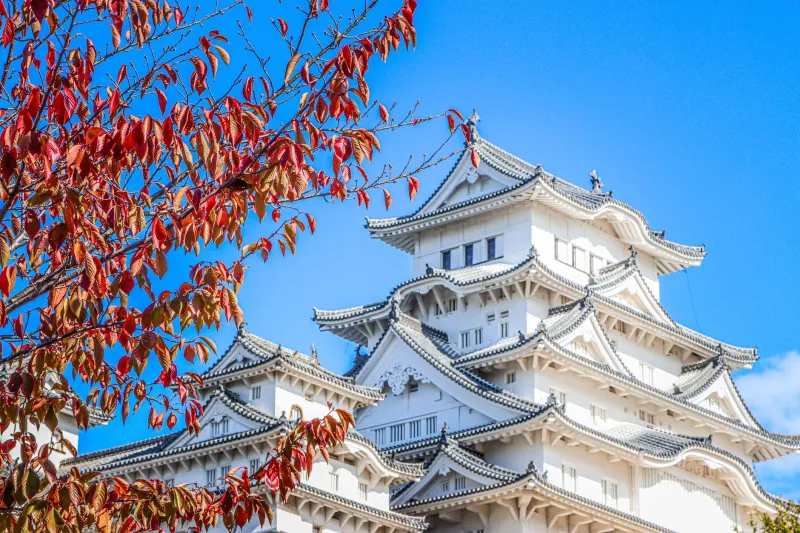
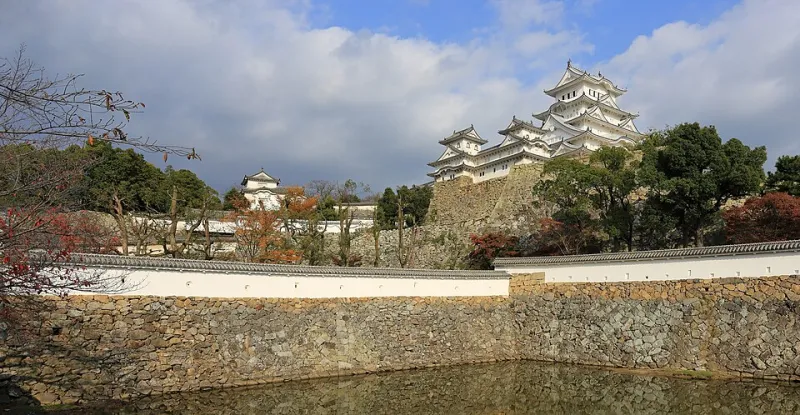
Himeji is one of the most visually coherent cities in Japan. The castle — that impossibly white, layered structure that dominates the skyline — sets a kind of standard that the rest of the city quietly upholds. Gardens are tended with obsessive care. Architecture respects proportion. Even the way food is presented in local restaurants reflects a worldview that treats aesthetics not as decoration but as a form of respect.
For Americans raised in a visual culture that often prioritizes quantity over quality — bigger signs, louder branding, more choices — this is genuinely disorienting. Not unpleasant. Just different in a way that takes time to process.
Koko-en, the garden complex adjacent to the castle, is where a lot of visitors first feel it. You walk through a series of walled garden rooms, each one different, each one precisely balanced, and somewhere in the third or fourth garden you realize you've stopped thinking about anything else. You're just there. Fully present in a way that's become rare.
What people bring home from that experience isn't a desire to build a Japanese garden in their backyard (though some do try). It's something more portable: a heightened sensitivity to the spaces they already inhabit. They notice when a room feels cluttered. They start caring about the objects they keep. They become, without quite meaning to, more deliberate about their surroundings.
History That Doesn't Perform Itself
American historical sites tend toward the theatrical. There are costumed interpreters, audio tours with dramatic music, immersive experiences designed to make sure you feel the history. It's well-intentioned, but it also keeps you at arm's length from the real thing, because the real thing is always being mediated by someone else's interpretation.
Himeji Castle doesn't do that. You walk in. You climb the wooden stairs. You touch the walls. The castle is just there — 400-plus years of it — and it asks you to bring your own understanding.
For a lot of American visitors, that's the first time history has ever felt genuinely present rather than presented. There's no narrator telling you how to feel. There's just the weight of the place, and your own quiet reckoning with it.
This experience tends to change how people engage with history back home. They become more curious about what's actually there versus what's been packaged for consumption. They seek out the unmediated version — the unmarked historical building, the local archive, the neighborhood that hasn't been turned into a heritage district yet. Himeji, in other words, makes better history tourists out of people.
The Courtesy Effect
No single aspect of Himeji surprises American visitors more consistently than the quality of everyday social interaction. Not the castle, not the food, not the cherry blossoms. The way people treat each other.
The politeness isn't performative or hollow — it's structural. It's baked into how transactions happen, how strangers navigate shared space, how service is understood. The person at the hotel front desk isn't just being professionally pleasant; they're expressing something that looks a lot like genuine care about your experience.
Most Americans find this moving in a way they can't quite articulate. Some feel a little embarrassed by how moved they are — like they didn't realize how starved they'd been for that quality of attention until they encountered it.
And then they go home, and they try. They hold doors longer. They make eye contact with service workers. They say thank you with more weight behind it. The effect fades, as effects do, but it doesn't disappear entirely. Something has been demonstrated as possible that they couldn't previously picture.
What You Actually Carry Home
The souvenirs are easy — the ceramics, the textiles, the carefully wrapped confections from a shop near Himeji Station. Those are lovely, and they sit on shelves and remind you of the trip.
But the real things you carry home from Himeji don't fit in a suitcase. They're harder to describe and harder to lose. A recalibrated relationship with time. A heightened sensitivity to beauty and craft. A more patient way of moving through spaces and conversations. A renewed belief that care and attention are worth the effort.
None of this is unique to Himeji — Japan in general has a way of doing this to Western visitors. But Himeji has a particular concentration of it. The city is small enough to actually absorb, coherent enough to actually understand, and unhurried enough to let the lessons land.
That's the afterglow effect. It doesn't announce itself. It just shows up, weeks later, in a quiet moment — when you pause before answering an email, or take an extra second to notice something beautiful, or choose to slow down when there's no practical reason to.
And you think: oh. That's still with me.
Good. It should be.