Alone in the Castle City: How Himeji Became America's Unlikely Solo Travel Destination
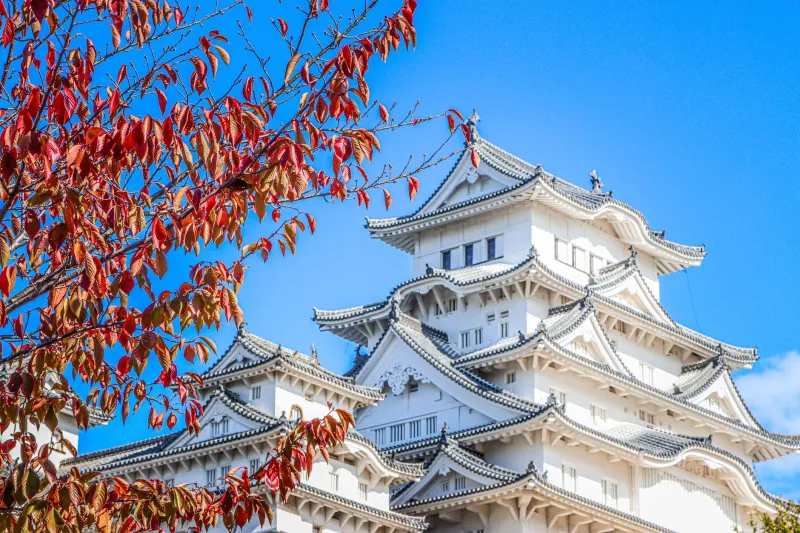
Photo by Photo by Rogério Toledo on Unsplash on Unsplash
There's a particular kind of traveler showing up in Himeji these days. They're not here on a group tour. They didn't stumble off a Shinkansen with a stuffed itinerary and a Rick Steves bookmark. They came on purpose — alone, with a loose plan and a vague but persistent feeling that this specific city had something to say to them.
Call it a pilgrimage. Call it a reset. Call it a mid-life recalibration or a post-breakup escape or just a long-overdue conversation with yourself. Whatever the label, the pattern is real: Americans are choosing Himeji as a deliberate solo destination, and the experiences they're reporting back don't sound like typical vacation highlights. They sound like turning points.
Why Himeji, Though?
Fair question. Japan has no shortage of places that inspire awe. Tokyo overwhelms in the best possible way. Kyoto delivers on every promise. Osaka feeds you until you can't move. So why are solo travelers — particularly Americans in their 30s, 40s, and 50s — landing in Himeji and deciding to stay?
Part of it is scale. Himeji is big enough to feel like a real city but small enough that it doesn't swallow you whole. You can walk most of what matters. You can get genuinely lost without it being stressful. The city doesn't demand anything from you, which turns out to be exactly what a lot of people need after years of a culture that demands everything.
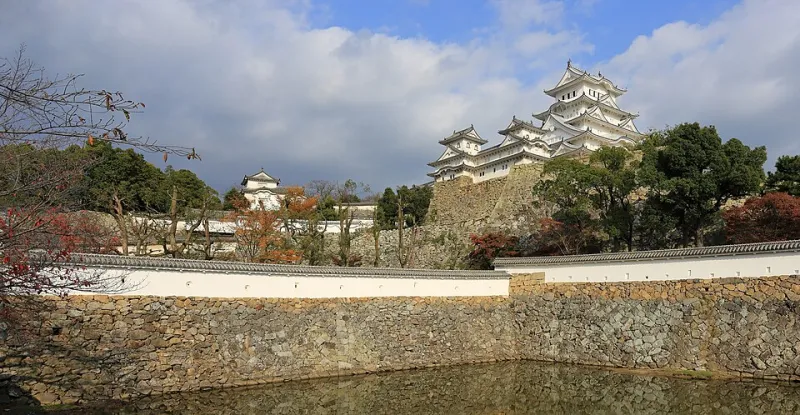
Part of it is the castle itself. Himeji Castle — Shirasagi-jo, the White Heron — has a way of stopping people cold. Not just photographically, though yes, it photographs beautifully. It stops you emotionally. It has survived fires, wars, earthquakes, and centuries of political upheaval without losing its essential form. For Americans carrying around their own versions of damage and rebuilding, that kind of quiet endurance lands differently than a pretty facade.
And part of it — maybe the biggest part — is that Himeji doesn't perform for tourists the way some destinations do. It's not trying to be charming. It just is.
What Solo Travelers Are Actually Experiencing
Spend time in any of Himeji's quieter corners — the moss-covered paths of Koko-en garden, the back alleys of Teramachi temple town, the early-morning approach to the castle before the tour groups arrive — and you'll encounter a specific kind of silence that feels earned rather than empty.
American solo travelers describe it in remarkably consistent terms. There's a decompression that happens, usually around day two or three. The mental noise that follows most of us everywhere — the to-do lists, the notifications, the ambient anxiety of modern American life — starts to thin out. Not because Himeji is some magical stress-free zone, but because it creates conditions where slowing down feels natural rather than forced.
The city's relationship with time is different. You feel it when you watch locals move through their days without apparent urgency. You feel it in the rhythm of the covered shopping arcade, the Miyuki-dori, where the same vendors have been selling the same things for decades and don't seem remotely bothered by that. You feel it most acutely when you're sitting in front of a 400-year-old castle that has outlasted every empire and ideology that tried to define it.
That temporal perspective has a way of reordering your personal priorities in ways that a week in a beach resort simply doesn't.
The Aloneness Is the Point
Here's the thing about solo travel that doesn't get said enough: it's uncomfortable in exactly the right ways. When you travel alone, you can't outsource your decisions, your moods, or your observations to a companion. You have to sit with yourself at dinner. You have to navigate confusion without a lifeline. You have to figure out what you actually want to do, not what makes sense as a group activity.
Himeji is particularly well-suited to this kind of confrontational solitude. The city is safe, navigable, and genuinely welcoming to foreigners — so the discomfort isn't logistical. It's internal. Which is, for many people, exactly the kind of discomfort they came looking for without fully realizing it.
Solo travelers here report doing things they'd never do in a group: spending three hours in a single room of the castle, reading every placard twice. Sitting in a temple garden until the light changes. Eating at a counter restaurant where conversation with the chef happens in broken Japanese and hand gestures and somehow communicates more than a lot of English-language conversations do back home.
Those experiences don't scale. They only happen when you're alone and unhurried.
Himeji as Mirror
There's a concept in Japanese aesthetics called ma — the meaningful pause, the productive emptiness between things. It's the silence between notes that makes music. The space in a room that makes the furniture matter. Himeji, more than almost anywhere else in Japan, embodies ma for Western visitors. It's what's not there — not the relentless stimulation, not the crowds, not the pressure to perform enjoyment — that creates the conditions for something genuine to surface.
American culture is not great at ma. We fill space. We schedule every hour. We treat stillness as laziness and solitude as loneliness. Himeji quietly challenges all of that just by existing the way it does.
Travelers who come here alone and stay long enough tend to leave with something they can't entirely articulate. A recalibration. A clearer sense of what they actually value versus what they've been told to value. A memory of themselves sitting quietly in front of something ancient and beautiful and thinking, clearly, for the first time in a long time.
Is that transformation? Maybe. Is it a pilgrimage? In the most secular, honest sense of the word — a journey taken to find something you couldn't locate at home — yes, probably.
Planning Your Own Himeji Solo Trip
If any of this is resonating, here's the practical version: Himeji is easy to reach from Osaka (about 30 minutes on the Shinkansen) and from Kyoto (about an hour). Most visitors spend a night or two, which is honestly not enough. Plan for three to four days minimum if you want the decompression to actually kick in.
Stay somewhere central enough to walk to the castle. Spend at least one morning there before 9 a.m. Wander Teramachi in the late afternoon. Eat at a counter restaurant at least once. Don't fill every hour.
And if you find yourself sitting somewhere quiet on day three, feeling slightly unmoored and oddly okay with it — that's not jet lag. That's Himeji doing what it does.
Welcome to the pilgrimage.