Once Is Never Enough: The Strange Pull That Keeps Dragging Travelers Back to Himeji
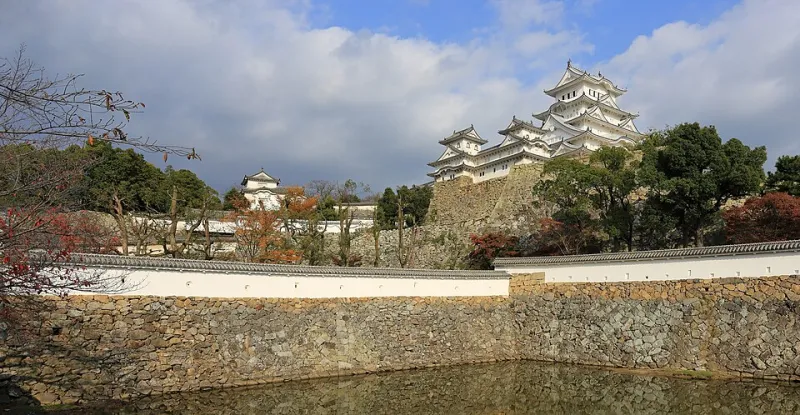
Photo: Martin Falbisoner, CC BY-SA 4.0, via Wikimedia Commons
Lisa from Portland has been to Japan four times. Three of those trips included Himeji. She's not a castle enthusiast. She doesn't speak Japanese. She doesn't have family connections to the region. But every time she starts planning a new trip to Japan, the same thing happens.
"I just... end up putting it on the itinerary," she says, laughing a little at herself. "I can't fully explain it. It's not like I have unfinished business there. It's more like the city has unfinished business with me."
She's not alone. Talk to enough Americans who've traveled to Himeji, and you start noticing a pattern. Not every visitor becomes a repeat pilgrim — but the ones who do tend to describe their return trips in language that sounds less like tourism and more like something else entirely. Something harder to put a name to.
The Difference Between Visiting and Being Called
There's a version of travel that's essentially consumption. You show up, you see the thing, you check the box, you go home. Himeji Castle is, objectively, one of the most spectacular surviving examples of feudal Japanese architecture on earth. It warrants the visit. It rewards the selfie. And for plenty of travelers, that's exactly what it is — a highlight on a two-week Japan circuit, wedged comfortably between Kyoto and Osaka.
But then there's the other version. The one where you get back to your hotel in the evening and feel vaguely restless, like you left something behind. The one where, months later, you're scrolling through your photos and something tightens in your chest that you can't quite attribute to nostalgia alone.
Psychologists who study travel behavior sometimes talk about the concept of "restorative environments" — places that don't just entertain you but actually replenish something that modern life has depleted. Attention. Patience. A sense of proportion. Himeji, with its deliberate pace, its layered quietness, its stubborn refusal to perform for the camera the way more tourist-saturated cities do, seems to function as exactly this kind of place for a certain type of visitor.
What Returning Travelers Actually Say
We asked a handful of Americans who've made multiple trips to Himeji what keeps drawing them back. Their answers were surprisingly consistent — and surprisingly hard to summarize in a bullet point.
Mark, a high school history teacher from Ohio, described his second visit as feeling "more like a conversation than a tour." On his first trip, he was absorbing information. On his second, he was listening differently. "I already knew the facts," he said. "So I could just... be there. And being there felt completely different."
Sarah, a graphic designer from Austin, said she returns because Himeji is one of the only places where she genuinely stops thinking about her phone. "Not because I'm disciplined," she clarified, "but because the city makes it feel unnecessary. Like the signal-to-noise ratio just flips."
And then there's David, a retired engineer from Seattle who's visited six times over fifteen years and describes Himeji as his "reset button." "My wife thinks I'm obsessed," he said. "But every time I go back, I come home lighter. I can't explain the mechanism. I just know it works."
The Architecture of Stillness
Part of what makes Himeji so disorienting for American travelers — in the best possible way — is how thoroughly it resists the logic of American leisure. There's no Vegas-style maximalism, no Times Square energy, no pressure to optimize every hour of your visit. The city moves at a pace that initially feels slow and eventually starts to feel correct.
The castle itself plays a role in this. It doesn't just sit on its hill — it presides. Visible from almost anywhere in the city center, it functions as a kind of constant, silent anchor. Locals barely seem to notice it anymore, the way you stop seeing a mountain when you grow up in its shadow. But for a visitor, that persistent white presence in the skyline has a quietly grounding effect. You always know where you are. You always have a reference point.
Koko-en Garden, tucked just west of the castle grounds, adds another layer. Nine separate garden enclosures, each with its own mood and season, designed to reward slow movement and repeated visits. The kind of place that reveals different things depending on when you arrive and what you're carrying emotionally when you walk through the gate.
The Transformation Trap (And Why It's Not Really a Trap)
There's a certain travel industry cliché that promises transformation — the trip that changes your life, the experience that makes you a new person. Most travelers are rightly skeptical of this framing. You don't become enlightened just because you bought a plane ticket.
But Himeji operates differently. It doesn't promise transformation. It doesn't market itself as a spiritual destination. It's a mid-sized Japanese city with a UNESCO World Heritage castle, some excellent regional food, and a population that largely goes about its business without performing itself for tourists. The transformation, when it happens, sneaks up on you.
What repeat visitors seem to be seeking isn't a dramatic before-and-after. It's something quieter: the chance to practice a different way of being present. A place where the default setting is attention rather than distraction. Where history isn't a theme park but a living context. Where beauty isn't shouted at you but waits, patiently, for you to slow down enough to notice it.
Coming Back as a Practice
There's a concept in Japanese aesthetics called ma — the meaningful pause, the productive interval, the space between things that gives everything else its shape. Himeji, for many returning visitors, functions as a kind of ma in the rhythm of their lives. Not an escape from reality, but a deliberate interruption that makes the rest of reality more legible.
Lisa from Portland is already planning her fourth trip. She's not sure exactly what she'll do differently this time. Maybe she'll finally make it to Shoshazan Engyoji, the mountaintop temple complex she keeps skipping. Maybe she'll spend a full afternoon in a neighborhood she's never explored. Or maybe she'll just sit in the garden and let the city do whatever it does to her.
"I used to feel like I needed to justify going back," she said. "Like I should have a reason. Now I just think of it as something I do. Like going to the same coffee shop because it's where you think clearly."
Some cities you visit. Some cities visit you back. Himeji, it turns out, is very good at the second thing.