How Himeji Quietly Dismantles Your Relationship With the Clock
There's a moment that a lot of American visitors to Himeji describe in almost identical terms. They're sitting somewhere — maybe on a stone bench inside the castle grounds, maybe on a low wooden step outside a temple in Engyoji, maybe just at a tiny restaurant counter waiting for food — and they realize they haven't looked at their phone in two hours. Not because they forgot. Not because the battery died. Because it simply didn't occur to them.
That moment, small as it sounds, is apparently a bigger deal than it seems.
The Pace Problem Nobody Talks About
America runs on urgency. Not the dramatic, crisis-level kind — though that exists too — but the low-grade, ambient kind. The kind that makes you refresh your inbox before your coffee is finished brewing. The kind that turns a five-minute wait into something that needs to be optimized. We've built an entire productivity culture around the idea that idle time is wasted time, and most of us have internalized it so completely we don't even notice it anymore.
Himeji doesn't operate on that frequency.
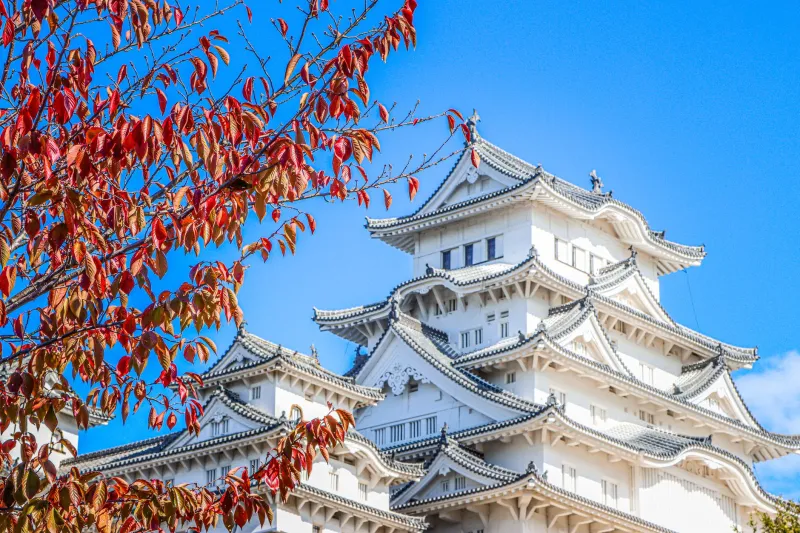
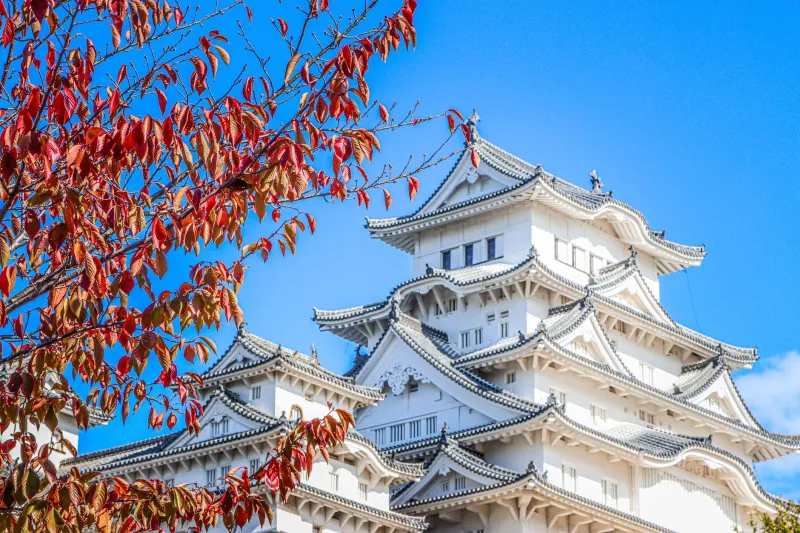
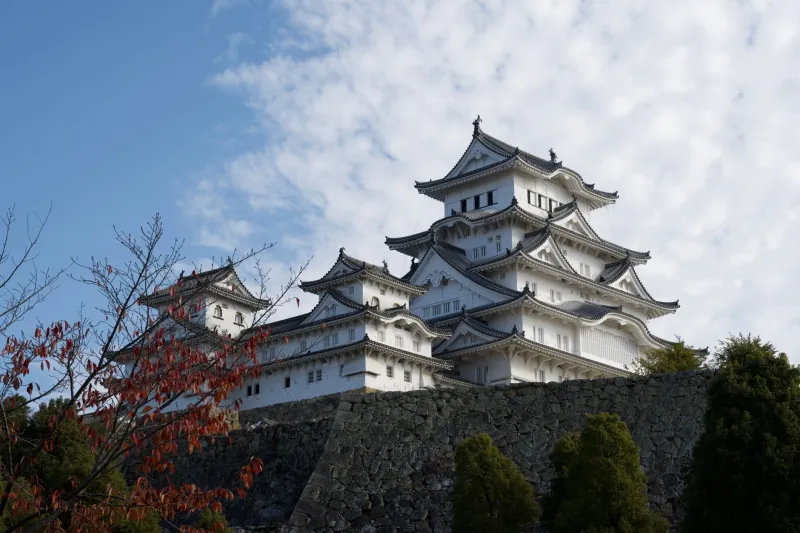
The city has a rhythm that's genuinely hard to describe until you're inside it. It's not slow in a sleepy or neglected way — the streets are clean, the trains run on time, the restaurants are efficient. But there's something about the texture of daily life here that feels fundamentally different from the constant forward momentum that American cities tend to demand. People walk without rushing. Shopkeepers don't hover. The castle — the entire reason most visitors come — just sits there on its hill, enormous and unhurried, not trying to impress anyone.
And somehow, without anyone telling you to, you start to match that pace.
What the Science Actually Says
This isn't just a vibe. There's a growing body of research in environmental psychology and cognitive neuroscience that helps explain what's happening when a traveler steps into a place like Himeji and feels their nervous system visibly downshift.
One relevant concept is something researchers call "attentional restoration theory," developed by psychologists Rachel and Stephen Kaplan in the 1980s. The basic idea is that natural and aesthetically coherent environments — places with visual harmony, soft complexity, and a sense of being "away" from ordinary demands — allow the brain's directed attention systems to recover from the fatigue that accumulates in high-stimulation, high-demand contexts. In plain terms: beautiful, calm places let your brain rest in a way that watching TV or scrolling social media doesn't.
Himeji is almost absurdly well-suited to this kind of restoration. The castle's white walls against a blue sky. The way Koko-en garden layers shadow and light. The stone paths that force you to watch your footing and, in doing so, pull your attention fully into the present moment. None of this is accidental — Japanese aesthetic principles like ma (negative space) and wabi-sabi (the beauty of impermanence and incompleteness) are essentially a centuries-old operating system for producing exactly this kind of mental quiet.
When you walk through spaces designed around those principles, your brain responds. Cortisol drops. The default mode network — the part of your brain responsible for rumination, self-referential thinking, and the mental noise we associate with stress — quiets down. You stop rehearsing your to-do list. You start actually looking at things.
The Visitors Who Came Back Different
What makes Himeji interesting isn't just that it produces this effect during a visit — plenty of vacation destinations do that. What's more unusual is how many people report that something from their time here followed them home.
Jessica, a marketing director from Austin who visited Himeji on a two-week Japan trip three years ago, describes it this way: "I came back and I just... stopped scheduling things back-to-back. I'd always done that. Every hour accounted for. And after Himeji, I started leaving gaps. Not because I had less to do — I had more to do — but because I'd felt what it was like to not be braced for the next thing all the time, and I couldn't unfeel it."
Marcus, a software engineer from Seattle, noticed changes in something more fundamental: his sleep. "I've had trouble sleeping since college. I'd lie there running through everything I hadn't finished. After Himeji, that stopped for a while. Like, months. I don't know how to explain it except that something reset."
These aren't isolated reports. Travel writers and tour operators who work with American visitors to Japan frequently describe Himeji specifically — rather than Tokyo, Kyoto, or Osaka — as the place where people seem to actually decompress rather than just sightsee. Part of it is scale: Himeji is a mid-sized city without the sensory overload of a major metropolis. Part of it is the castle's gravitational pull, which gives visitors a single organizing focal point rather than an anxious list of must-sees. And part of it seems to be something harder to quantify — a quality of presence in the city itself.
Why "Doing Nothing" Feels So Radical Here
One of the cultural gaps that American visitors consistently notice in Himeji is the local relationship to unstructured time. In the US, sitting at a café for an hour without a laptop or a meeting or a "purpose" carries a faint social charge — you're either being indulgent or you're between things. In Himeji, and in Japan more broadly, there's a different valuation of what you might call contemplative presence. People watch the castle from the park. They tend small gardens with meticulous attention. They drink tea slowly.
This isn't laziness — anyone who's watched a Japanese craftsperson work understands that. It's more like a different theory of what productivity actually means. The idea that careful observation, rest, and aesthetic attention are themselves forms of productive engagement with the world is genuinely foreign to most American visitors, and encountering it in practice — not as a concept but as a lived reality on the streets of an actual city — tends to land differently than reading about it ever could.
What You Bring Home (If You're Paying Attention)
The souvenir most worth carrying home from Himeji isn't lacquerware or castle-shaped keychains. It's the memory of what it felt like to exist at a different speed — and the slow realization, back in your regular life, that the speed you'd always accepted as normal was actually a choice.
That's not a small thing. For a lot of visitors, it's the thing that makes Himeji the trip they keep returning to in their minds, the place that quietly rearranged something they didn't know needed rearranging.
The castle will still be there on your next visit, white and patient and completely indifferent to your schedule. The question is whether you'll show up ready to let it do its work on you.