Why a 400-Year-Old Japanese Castle Feels Like It Was Built for You
You don't expect to feel at home inside a feudal Japanese fortress. That's not the pitch. You fly into Osaka or Kyoto, you take the shinkansen west, you show up in Himeji half-expecting to feel like a tourist — which, technically, you are — and then you walk through the castle gate and something strange happens. The place doesn't feel foreign. It feels, against all logic, like somewhere you've been before.
This isn't nostalgia. It isn't jet-lag playing tricks. And it's definitely not a coincidence.
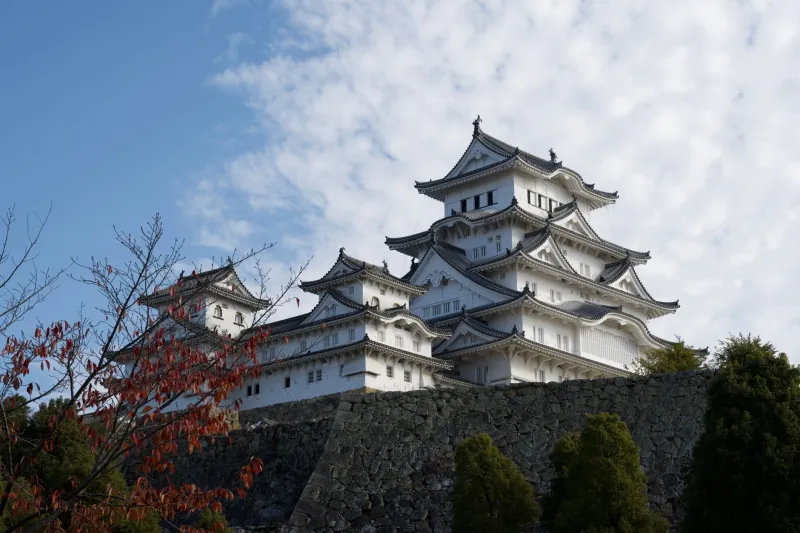
Himeji Castle — the UNESCO-designated, impossibly white structure that has dominated this city's skyline since the early 1600s — was engineered with an almost ruthless intentionality. Its builders weren't thinking about Western visitors. They were thinking about sieges, visibility, and the psychology of power. But in doing so, they created a spatial experience that resonates with something deep in the American psyche: the desire for systems that make sense.
The Logic You Can Feel Before You Can See It
Most American visitors approach Himeji Castle along Otemae-dori, the wide boulevard that frames the main tower in an almost theatrical straight line. That's not an accident. The approach was designed to make the castle appear both accessible and dominant — a visual statement about order and authority that reads clearly across cultures.
Western architectural traditions have their own version of this language. Washington D.C.'s Mall, the long axes of Versailles, the grand avenues of Chicago's lakefront — Americans are trained from childhood to read straight lines as civic seriousness. When Himeji offers a comparable experience, it registers as familiar even though everything surrounding it is unmistakably Japanese.
But here's where it gets interesting. The moment you step off that boulevard and enter the castle grounds, the geometry shifts completely. The path to the main tower is anything but straight. It spirals. It doubles back. It forces you through narrow passages and around blind corners. What looked like a direct invitation turns out to be an elaborate maze.
And somehow, this feels right too.
Controlled Disorientation as Architecture
The defensive design of Himeji Castle was intentionally confusing to potential attackers. The winding approach path, the multiple gates positioned at odd angles, the stone walls that seem to close in and then open unexpectedly — all of it was calculated to slow down enemies and expose them to fire from above.
For a 21st-century American tourist, it does something entirely different. It creates a rare experience of productive disorientation — the kind where you're not sure where you're going, but you trust the structure enough to keep moving.
This is genuinely unusual. American travel culture tends to favor legibility. We want maps, we want signage, we want to know how long the line is and whether the parking lot has a clear exit. Himeji Castle dismantles all of that, and visitors don't resist it. They lean in. There's something about the obvious craftsmanship, the visible logic of the stone placements, the sheer age of the thing — it communicates trustworthiness even while withholding transparency.
Psychologists sometimes talk about the difference between complicated and complex systems. Complicated systems are hard to understand but ultimately reducible to rules. Complex systems generate emergent behavior that can't be fully predicted. Himeji Castle is complicated in its engineering and complex in its experience — and Americans, who live inside enormously complex systems every day, seem to find that combination oddly comforting.
The White Keeps Changing
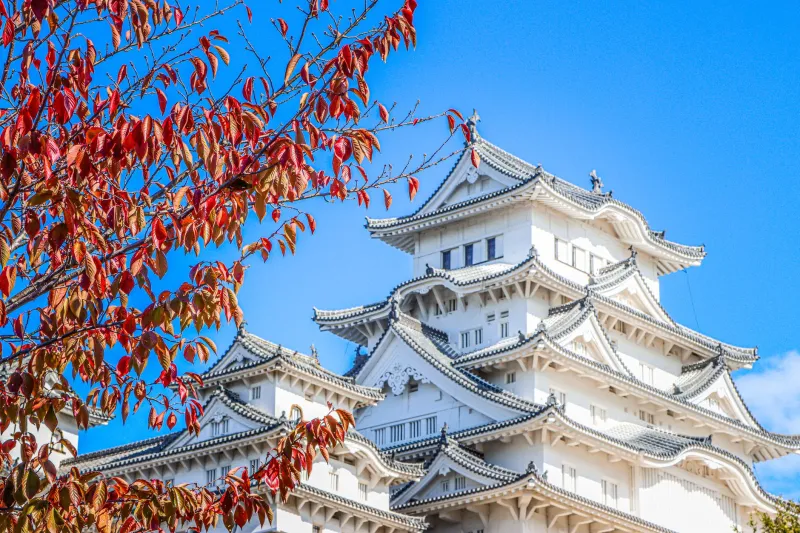
One of the most commented-on features of Himeji Castle is the white. The castle's exterior is coated in white plaster — a finish that was both fire-resistant and visually striking — and it earns its nickname, Hakuro-jo (White Heron Castle), completely. But the white isn't static.
Depending on the time of day, the season, and the weather, the castle reads as brilliant, soft, grey, almost blue, warmly cream, or starkly bright. It changes. And this variability, rather than being destabilizing, makes the structure feel alive in a way that most American landmarks simply don't.
The Lincoln Memorial is grey. The White House is a specific, managed white. The Golden Gate Bridge is a particular shade of international orange. These are fixed identities. Himeji Castle has a fixed structure but a fluid appearance, and that combination — stable bones, shifting surface — maps onto something a lot of Americans are quietly searching for in their own lives.
Belonging, in the contemporary American experience, often feels like a moving target. The places and communities that were supposed to anchor people have gotten more complicated, more contested, more conditional. And here's this castle that has stood for four centuries, that survived World War II bombing raids through a combination of luck and resilience, that was painstakingly restored over decades — and it still looks different every single time you see it. Permanent but not rigid. That's a message a lot of people need right now.
What the Openness Costs You
For all its defensive architecture, Himeji Castle is genuinely open. You can walk through most of it. You can climb to the top floor. You can touch the wooden beams, run your hand along the stone walls, peer through the arrow slits at the city below. This level of physical access would be unthinkable at most comparable Western sites — you can't wander through the Tower of London's interior like this, and you certainly can't touch anything at most American historic sites without setting off an alarm.
The access comes with a cost, though, and it's a worthwhile one. The staircases are steep — genuinely steep, not theme-park steep. The floors are uneven. The headroom in certain passages is designed for people of a different era and average height. The castle doesn't accommodate you; you accommodate the castle.
And this, too, seems to be part of the appeal. There's a growing exhaustion in American travel culture with experiences that have been over-engineered for comfort and convenience. The castle's refusal to smooth out its edges, to install modern handrails everywhere or widen the passages, reads as respect — for the structure, for history, and weirdly, for the visitor. It assumes you can handle it.
Coming Back to the Same Place Differently
People who visit Himeji Castle more than once — and there are more of them than you'd expect — consistently report that the second visit feels like a different building. The same stone, the same white walls, the same spiraling path. But the experience of moving through it shifts when you're not focused on finding your way.
That's the other thing the architecture does quietly: it rewards return. The first visit is about navigation. The second is about noticing. The third is about something harder to name.
Maybe that's the deepest reason American visitors respond to Himeji Castle the way they do. In a culture that often prioritizes novelty over depth, here's a place that actively gets better the more time you give it. The geometry doesn't change. Your relationship to it does.
And that, if you want to get philosophical about a Japanese castle on a Tuesday afternoon, might be exactly what belonging actually looks like.