After Himeji, Everywhere Else Feels Like a Copy
Somewhere between your third morning coffee in the shadow of the castle and your last slow walk through Koko-en's mossy corridors, something happens. It doesn't announce itself. There's no dramatic moment of clarity, no journal entry you can point to later. But when you land back home — or, worse, when you try to get excited about your next trip to some perfectly respectable European city — you notice it.
The enthusiasm isn't quite there anymore.
This is what longtime visitors to Himeji have started calling the Himeji Effect, and if you've felt it, you already know exactly what we're talking about.
It's Not Just the Castle (Though It Doesn't Hurt)
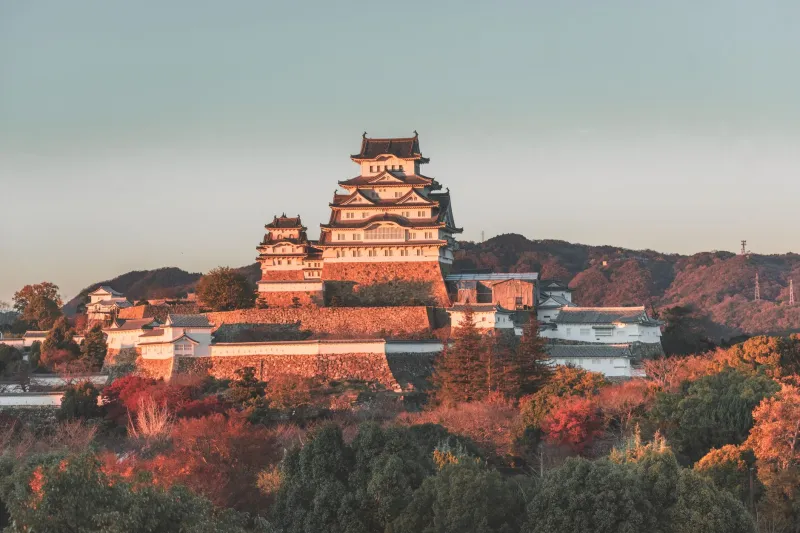
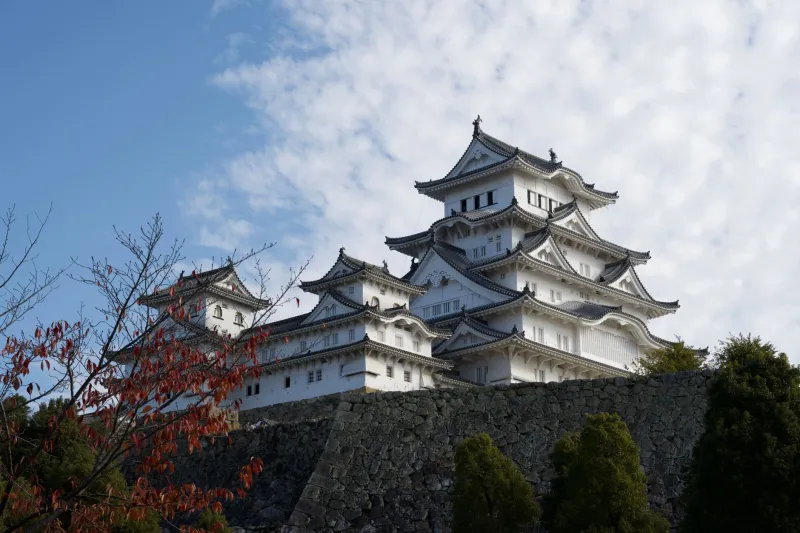
Let's be honest: Himeji Castle would be enough on its own. The thing is genuinely staggering — 400-plus years of architectural intention stacked into something that manages to feel both impossibly grand and almost delicate at the same time. White walls that seem to glow from the inside. Rooflines that curve like they're mid-exhale. A structure that somehow communicates both absolute power and profound restraint in the same breath.
But experienced travelers will tell you that great architecture alone doesn't rewire you. You can admire the Eiffel Tower, the Sagrada Família, the Empire State Building, and still feel basically fine about the rest of your travel life afterward. The castle is the entry point, not the mechanism.
What actually does the recalibrating is everything around it.
The Pace Problem
American travel culture — and really, Western travel culture broadly — tends to operate on a kind of optimization logic. You have a finite number of days, a finite budget, and a list of things that are supposedly worth seeing. The goal, consciously or not, is to maximize the ratio of experiences to time. Move fast. Cover ground. Check boxes.
Himeji resists this almost physically.
The city isn't tiny, but it's scaled for walking and wandering rather than sprinting between landmarks. The neighborhoods just outside the tourist corridors — Shikamachi, the old merchant districts near the station — don't reward rushing. They reward the kind of attention that only comes when you've stopped trying to get somewhere. You notice the texture of a wooden gate. The sound of a neighborhood temple bell at dusk. The way the light hits the castle's upper floors differently at 7am than it does at 10.
Travel psychologist Dr. Lena Marsh, who has studied what she calls "destination imprinting" in long-haul travelers, describes it this way: "When a place consistently rewards deceleration rather than acceleration, it trains your nervous system to expect depth over breadth. After enough exposure, destinations that operate on speed and surface feel neurologically unsatisfying. You're not being a snob. Your brain has genuinely recalibrated what counts as reward."
In other words: Himeji teaches you how to travel in a way that makes a lot of other travel feel shallow.
The Sensory Layering
There's something else going on beyond pace, and it's harder to articulate. Himeji is a place that operates on multiple sensory registers simultaneously, and it does it quietly.
The incense at Engyo-ji temple on Mount Shosha drifts down into the cedar groves in a way that makes the whole mountain smell ancient. The sound of wooden sandals on stone paths in the gardens near the castle creates a rhythm that somehow feels both foreign and deeply familiar. The food — the regional dishes that don't travel well and don't show up in Japanese restaurants back home — has a specificity that reminds you that cuisine is also a form of geography.
None of this is accidental. Himeji has been a site of cultural and spiritual significance for centuries, and the sensory environment reflects layers of intentional cultivation that most modern tourist destinations simply don't have time to develop. When you've spent several days in that kind of environment, the manufactured atmospheres of most tourist experiences — the curated playlists in hotel lobbies, the Instagram-optimized restaurant lighting, the vaguely "cultural" experiences that feel like they were designed by a committee — start to feel a little thin.
"I went to Lisbon six months after Himeji," says Marcus T., a Chicago-based architect who first visited Himeji in 2019 and has returned twice since. "Lisbon is beautiful. I know it's beautiful. But I kept catching myself waiting for something I couldn't name. Like I was listening for a frequency the city wasn't broadcasting."
The Spiritual Undertow
Himeji isn't marketed as a spiritual destination in the way that, say, Kyoto or the Kumano Kodo pilgrimage routes are. But there's a contemplative quality to the place that catches a lot of visitors off guard.
Part of it is the castle itself, which functions as a kind of anchor — a fixed point around which the city orbits, visible from unexpected angles throughout your day. Having a single, centuries-old structure as a constant visual reference creates a kind of temporal disorientation that turns out to be oddly grounding. You're aware, in a low-grade but persistent way, that you are somewhere with a very long memory.
The temples and shrines scattered throughout the city amplify this. You don't have to be religious — or even particularly spiritual — to feel the weight of accumulated intention that comes with spaces that have been used for prayer and reflection for hundreds of years. That weight does something to your internal rhythm. It slows you down even when you're not trying to slow down.
For many American travelers, this is genuinely new territory. The US is a young country with a young travel infrastructure, and most of our domestic destinations — however beautiful — don't carry this particular kind of depth. Himeji introduces you to what it feels like to be in a place that has been meaningful to humans for a very long time. Once you've felt that, absence of it is noticeable.
So What Do You Do With This?
The honest answer is: lean into it.
The Himeji Effect isn't a problem to solve. It's information. It's your own taste becoming more specific, which is generally a good thing. Yes, it means that some travel experiences will feel less satisfying than they used to. But it also means you know, with unusual clarity, what you're actually looking for when you travel — and that makes you better at finding it.
It also means you'll probably come back to Himeji. Almost everyone does.
There's a reason the city has developed this quiet reputation among a certain kind of traveler — not the Instagram-optimizer or the bucket-list checker, but the person who travels to feel something real and is willing to go slow enough to let that happen. Himeji is extraordinarily good at delivering that. Better, arguably, than almost anywhere else in Japan. Better, many would say, than almost anywhere else in the world.
The copy never quite matches the original. But at least now you know what the original feels like.